This image is possibly from a brochure printed by the Kamloops Sentinel in the 1940s. The northeast corner of the lodge in the background.

~Submitted by Neil Burton

From left to right -- Reggie, Isobel, Arthur.
A section of the summer cottage, constructed in 1915 and is still in use today, appears in the background.
~ Neil Burton
This book chapter is from: The Value of Lakes Around the Secwépemc Territory Copyright © 2024 by Adewale Adewunmi and Olanike Onasile is licensed under a Creative Commons Attribution-NonCommercial-ShareAlike 4.0 International License, except where otherwise noted.
A series of services provided by the environment make Earth habitable for humans. Human existence depends directly and indirectly on the services provided by lakes. The services include provisioning, recreational, regulation, and maintenance functions. Although we value some of the direct services provided by lakes due to the economic importance of water, we do not acknowledge other services that affect us indirectly. Humans are rational and tend to appreciate materials with monetary value, but most of the services provided by various lakes are considered gifts from nature; hence, humans place a higher priority on human capital and physical capital than the free services that they get from the environment. Assessing the economic values of lakes is not straightforward due to the non-availability of a specific market for trading the services provided by the biome (Reynard & Lanzanova, 2017). In this chapter, we attempt to assess the value of ecosystem services and Lac Le Jeune as a natural asset (capital).
Through traditional knowledge and use of the Rivers and Lakes within Secwépemcúlucw, my ancestor Antoine Lampreau, contributed to the trade economy within our region. Our waterways were an integral part of life and were used for trade, fishing, gathering and connection to surrounding communities.
— Kaleena Carriere (she/her), Advancement Officer — Indigenization & Williams Lake Campus, Thompson Rivers University
Lac Le Jeune is a lake located within Lac Le Jeune Provincial Park near Kamloops, British Columbia, Canada (“Lac Le Jeune,” 2022). The lake is named after Father Jean Marie Raphael Le Jeune, a well-respected priest of the indigenous population since 1880, who spent most of his life there (Balf, 1978). The Lac Le Jeune Provincial Park, which was established in 1956, is a 213-ha park located 37 km south of Kamloops and 47 km north of Merritt. The lake, with approximately 147 ha surface area, is also called “Batchelor” which means trout and “Chuhwels.” The lake has a 240-ft fishing wharf that caters to physically challenged anglers, and it is famous for producing fighting rainbow trout with an average size of 1.5 kg (BC Parks, n.d.).
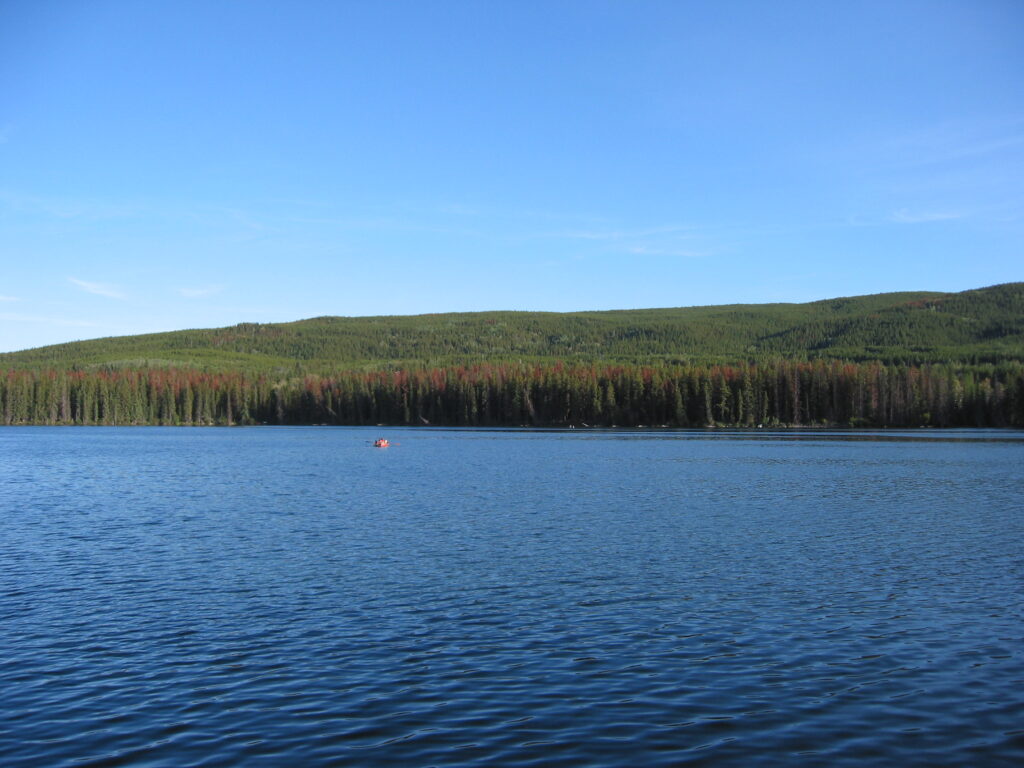
Reynaud and Lanzanova (2017) categorized the cultural services lakes provide into several sub-services, including fishing, boating, camping, sightseeing, and swimming. Lac Le Jeune is a popular recreational lake that provides a series of ecosystem services, including provisioning, regulating, cultural, and supporting, to residents and non-residents of the area. The lake’s most evident service is the cultural services, and it provides all the recreational sub-services highlighted by Reynaud and Lanzanova (2017). Kamloops This Week (2018b) reported that the City of Kamloops awarded a contract worth $899,000 to a local contractor to reconstruct the surface of Lac Le Jeune Road, which leads to the lake. The decision consequently makes the trip much easier for tourists.
The total economic value of the lake can be grouped into use value and non-use value. Lac Le Jeune’s direct use value (mostly in the summer) has to do with the direct satisfaction that residents and tourists derived through its use, such as fishing, irrigating, taking pictures, camping, and breathing fresh air; meanwhile, the indirect use value has to do with the indirect benefits the lake offers to the society (BC Parks, n.d.). For instance, Lac Le Jeune serves as a source of water storage, which automatically helps reduce the risk of downstream flooding. It also serves as a water supply for the vegetation, such as lodgepole pine, marshland, and pinegrass forest surrounding the lake, providing good air and temperature for the tourists. It serves as a habitat for aquatic animals that comprise the food web and hosts terrestrial animals such as moose, bears, and lynxes (British Columbia, n.d.).
In addition to the indirect use value, the lake also helps reduce human activities’ impact on nature by absorbing pollutants. Furthermore, the non-use values of Lac Le Jeune are the benefits that residents and tourists derive from the existence of the lake, which is not recreational nor commercial related, such as nature appreciation, conservation, and cultural significance of the lake. For instance, Lac le Jeune is well known for its fighting rainbow trout, making trout fishery very significant to the province (British Columbia, n.d.).
This study uses the benefit transfer method (BTM) described by Sun Oh et al. (2014) to estimate the value of freshwater lakes. Recent estimates on freshwater lakes were obtained from the Ecosystem Services Valuation Database and compared to the previous studies carried out by Constanza et al. (1997) and Constanza et al. (2014) (Brander et al., 2023).
The benefit transfer method (BTM) is the process of applying valuation results, functions, data, or models obtained from the study of a resource (study site) to evaluate the economic values of another resource (policy site). (Sun Oh et al., 2014). This makes it possible to estimate the monetary value of Lac Le Jeune with the value of the lake surface area and the value of various ecosystem services of lakes in Canada, the UK, and the USA (study site).
The Ecosystem Services Valuation Database (ESVD) is an online database that was created to provide robust and accessible information on the economic benefits and biodiversity (Brander et al., 2023). It contains over 8,000 value records from over 1,100 studies from various biomes, ecosystem services, and geographic locations.
Table 1 demonstrates that by multiplying the size of Lac Le Jeune, which is an approximately 147-ha surface area, with the per hectare values of lakes in Canada, the UK, and the US (Angler’s Atlas, n.d.f). The value of ecosystem services provided by lakes in Canada, the UK, and the US is estimated at a conservative value of $23,542/ha/year, which is less than what Brander et al. (2023) estimated at $108,361/ha/year and the $41,251/ha/year conservative estimate for lakes in North America, Europe, and Oceania. There are two reasons our figure for these lakes is less than Brander et al.’s (2023) value. First, our value does not capture many sub-categories services, especially the regulation service, and second, it does not include all consumer surplus from the natural asset. Thus, using the median approach, the total value of economic service provided by the lake can be estimated as $11.6 million, $8.5 million using the average value, and $3.5 million using the modified median that removes low-count ecosystem service.
| Skip Table 1 | |||
| Ecosystem | Average | Median | Modified Median |
|---|---|---|---|
| Provisioning | 3,015,999 | 2,857,239 | 62,769 |
| Maintenance and supporting | 263,424 | 263,424 | — |
| Regulation | 79,086 | 79,086 | — |
| Cultural and recreational | 8,225,532 | 5,285,973 | 3,412,752 |
| Total | 11,584,188 | 8,485,722 | 3,460,674 |
Note. Adapted from Brander et al. (2023). See Table A for a full breakdown
Applying a simple annual interest of 1.5% to the total ecosystem service value (median approach) gives a value of the Lac Le Jeune at $773 million, $567 million (median approach), and $233 million for the conservative approach. However, the value of Lac Le Jeune as a natural asset is a minimum of $3.5 billion and a maximum of $11.6 billion using the lower 0.1% discount rate. Compared to the 2022 value of British Columbia’s Gross Domestic Product (GDP), which is $284.8 billion, at the maximum estimation, Lac Le Jeune provides benefits equivalent to 4.1% of the province’s GDP (Statistics Canada, 2023).
Table 2 shows a breakdown of the value of Lac Le Jeune as a natural asset.
| Skip Table 2 | |||
| Valuation | Ecosystem Services per year (in millions of USD) | 1.5% Discount Rate (in millions of USD) | 0.1% Discount Rate (in millions of USD) |
|---|---|---|---|
| Average (per hectare per year) | 11.6 | 773 | 11,600 |
| Median (per hectare per year) | 8.5 | 567 | 8,500 |
| Conservative/Modified Median (per hectare per year) | 3.5 | 233 | 3,500 |
Note. Calculated using data from Table 1
This chapter has helped to place a monetary value on the ecosystem services provided by Lac Le Jeune. The study uses two different social discount rates (1.5% and 0.1%) to evaluate the value of the lake. The two discount rates place different weights on future generations. The lower discount rate places a higher weight on the future generation and allocates a much higher value to the resource than the 1.5% discount rate. The maximum value of the lake using the lowest discount rate, which portrays the sustainability goals of the indigenous community, is $11.6 billion, almost 5% of the province’s GDP.
It is important to note that the estimates from this study only provide comprehension of Lac Le Jeune’s monetary value; further estimation, such as contingency valuation analysis, travel cost, and hedonic pricing evaluation, may be required for decision-making. This value may provide some insights to policymakers on the lake’s economic value and consequently influence them to enact regulations that protect the lake from development or other activities that may harm its value.
| Skip Table A1 | ||||
| Ecosystem Service | # of Values | Average | Median | Modified Median |
|---|---|---|---|---|
| Food | 21 | 177,282 | 19,992 | 19,992 |
| Raw Material | 4 | 29,547 | 28,077 | 28,077 |
| Water | 2 | 2,809,317 | 2,809,317 | — |
| Total | 27 | 3,015,999 | 2,857,239 | 62,769 |
| Skip Table A2 | ||||
| Ecosystem Service | # of Values | Average | Median | Modified Median |
|---|---|---|---|---|
| Maintenance of Genetic Diversity | 1 | 154,350 | 154,350 | — |
| Maintenance of Life Cycle | 2 | 109,074 | 109,074 | — |
| Total | 3 | 263,424 | 263,424 | — |
| Skip Table A3 | ||||
| Ecosystem Service | # of Values | Average | Median | Modified Median |
|---|---|---|---|---|
| Aesthetic Information | 8 | 1,425,165 | 209,034 | 209,034 |
| Opportunities for Recreation & Tourism | 40 | 4,927,146 | 3,203,718 | 3,203,718 |
| Inspiration for Culture, Art, & Design | 1 | 1,873,221 | 1,873,221 | — |
| Total | 49 | 8,225,532 | 5,285,973 | 3,412,752 |
| Skip Table A4 | ||||
| Ecosystem Service | # of Values | Average | Median | Modified Median |
|---|---|---|---|---|
| Moderation of Extreme Events | 2 | 79,086 | 79,086 | — |
Note. Adapted from Table I in the Introduction.
Figure 1: “Lake View, Lac Le Jeune, Canada” by Paul Mannix (2006), via Wikimedia Commons, is used under a CC BY 2.0 license.
Angler’s Atlas. (n.d.f). Lac Le Jeune. https://www.anglersatlas.com/place/100554/lac-le-jeune
Artell, J. (2014). Lots of value? A spatial hedonic approach to water quality valuation. Journal of Environmenal Planning and Management, 57(6), 862–882. https://doi.org/10.1080/09640568.2013.772504
BC Parks. (n.d.). Lac Le Jeune Park. Government of British Columbia. https://bcparks.ca/lac-le-jeune-park/
Brander, L. M., de Groot, R., Guisado Goñi, V., van ‘t Hoff, V., Schägner, P., Solomonides, S., McVittie, A., Eppink, F., Sposato, M., Do, L., Ghermandi, A., and Sinclair, M., Thomas, R., (2023). Ecosystem services valuation database (ESVD). Foundation for Sustainable Development and Brander Environmental Economics. https://www.esvd.net/
British Columbia. (n.d.). Lac Le Jeune Provincial Park. https://britishcolumbia.com/things-to-do-and-see/parks-and-trails/thompson-okanagan/lac-le-jeune-provincial-park/
Costanza, R., d’Arge, R., de Groot, R., Farber, S., Grasso, M., Hannon, B., Limburg, K., Naeem, S., O’Neill, R. V., Paruelo, J., Raskin, R. G., Sutton, P., & van den Belt, M. (1997). The value of the world’s ecosystem services and natural capital. Nature, 387(15), 253–260. https://doi.org/10.1038/387253a0
Costanza, R., de Groot, R., Sutton, P., van der Ploeg, S., Anderson, S. J., Kubiszewski, I., Farber, S., & Turner, R., K. (2014). Changes in the global value of ecosystem services. Global Environmental Change, 26, 152–158. https://doi.org/10.1016/j.gloenvcha.2014.04.002
Davidson, M. D. (2013). On the relation between ecosystem services, intrinsic value, existence value and economic valuation. Ecological Economics, 95, 171–177. https://doi.org/10.1016/j.ecolecon.2013.09.002
Herath, G. (1999). Estimation of community values of lakes: A study of Lake Mokoan in Victoria, Australia. Economic Analysis and Policy, 29(1), 31–44. https://doi.org/10.1016/S0313-5926(99)50003-9
Kamloops This Week. (2018b, March 28). Lac Le Jeune Road to be resurfaced. https://archive.kamloopsthisweek.com/2018/03/28/lac-le-jeune-road-to-be-resurfaced/
Lac Le Jeune. (2022, June 14). In Wikipedia. https://en.wikipedia.org/w/index.php?title=Lac_Le_Jeune&direction=prev&oldid=1170229828
Mannix, P. (2006). Lake view, Lac Le Jeune, Canada [Image]. Wikimedia Commons. https://commons.wikimedia.org/wiki/File:Lake_View,_Lac_Le_Jeune,_Canada.jpg
Reynaud, A., & Lanzanova, D. (2017). A global meta-analysis of the value of ecosystem services provided by lakes. Ecological Economics, 137, 184–194. https://doi.org/10.1016/j.ecolecon.2017.03.001
Statistics Canada. (2023). Gross domestic product, income-based, provincial and territorial, annual (x 1,000,000). https://doi.org/10.25318/3610022101-eng
Sun Oh, J. Herzig, S. C., & Daujat, C. (2014). Benefit transfer method. Ecosystem Services.
Sutton, P. C., & Anderson, S. J. (2016). Holistic valuation of urban ecosystem services in New York City’s Central Park. Ecosystem Services, 19, 87–91, https://doi.org/10.1016/j.ecoser.2016.04.003
Verpoorter, C., Kutser, T., Seekell, D. A., & Tranvik, L. J. (2014). A global inventory of lakes based on high-resolution satellite imagery. Geophysical Research Letters, 41(18), 6396–6402. https://doi.org/10.1002/2014GL060641
Wilson, M. A., & Carpenter, S. R. (1999). Economic valuation of freshwater ecosystem services in the United States: 1971-1997. Ecological Applications, 9(3), 772–783. https://doi.org/10.2307/2641328

The Value of Lakes Around the Secwépemc Territory Copyright © 2024 by Adewale Adewunmi and Olanike Onasile is licensed under a Creative Commons Attribution-NonCommercial-ShareAlike 4.0 International License, except where otherwise noted
Thank you, Neil Burton, for sharing this history on the Lac Le Jeune Resort up to 1985.
 |
| Display photo put together by my Reg Burton, possibly in the 1950’s |

 |
| From a Christmas Card of John and Muriel Whitaker |
Last week many residents noticed something was very different as they wandered up Lac Le Jeune Road. Our very familiar and loved tree had come down. The nest at the top was home to ospreys (and the occasional goose with goslings!). We will all miss seeing this landmark and the bird activity surrounding it.


 |
| Murray Foubister / CC BY-SA |
 |
| Photo courtesy of Kamloops History Community, posted here with permission |
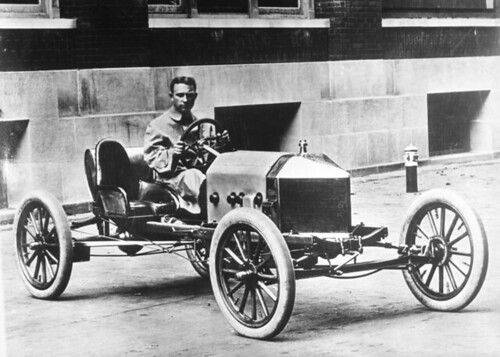 |
| Ford race car, about 1910, cc by-nc-sa |
 |
| http://commons.wikimedia.org/wiki/File:Curtiss_HS-2_NAN10-48.jpg |


