Enjoy this video of the wildlife in our region!
Totally Natural Regional DistrictKISS.mp4 from Frank Ritcey on Vimeo.
Enjoy this video of the wildlife in our region!
Totally Natural Regional DistrictKISS.mp4 from Frank Ritcey on Vimeo.
-----BC SPCA News Release January 25, 2021-----
The BC SPCA is asking the public to temporarily remove backyard bird feeders in order to stop the spread of a deadly salmonella outbreak that has spread throughout the province. The outbreak is affecting pine siskin birds specifically.
“2021 has gotten off to a rough start for pine siskins on southern Vancouver Island and the rest of the province with a deadly outbreak of salmonella,” says Andrea Wallace, manager of wild animal welfare.
So far in January, the BC SPCA’s Wild Animal Rehabilitation Centre (ARC) has admitted 43 pine siskin birds with many of them showing signs of disease but few surviving.
“Salmonella is a severe and contagious disease so we’re asking people to temporarily remove, or at the very least clean, their bird feeders and bird baths to prevent further spread of the disease,” says Wallace.

This is a summary of activities and tips I've heard from residents. I'm also including tips to decrease the risk of getting or spreading COVID-19, along with other general safety information.
Sylvia
This year mice seem to be seeking indoor living spaces earlier than usual! It may be related to the cool start to the season. This information about controlling mice was submitted by biologist Roberta Roberta Olenick.
--------------
Please do not use poison to get rid of mice. I know they can be a problem if they come inside your house, but poison is not an appropriate way to address the problem. A poisoned mouse, even if still alive, can pass the poison on to innocent victims including pets and wildlife.
 |
| Snapshot from Steve Roy's webcam http://www.laclejeune.ca |
 |
| Photo by Sandra Putnam |
 |
| Photo by Alexander Kagan on Unsplash |
Keep an eye out when in and around the provincial park campsite area. Yesterday Dana Mattice was charged by a cow moose protecting her calf.
 |
| Not the actual moose :) |


 |
| Click to access full document (PDF) |
 |
| Photo by Peter Sulzle, taken in Lac Le Jeune |
 |
| From the Quick Guide brochure |


- Never approach a moose. Give the animals a wide berth and ensure they always have an escape route.
- Female moose with calves need extra space. Moose cows are very protective of their young and may attack if they perceive a threat. If you come across a cow and calf, calmly leave the area immediately.
- Be aware of moose body language. A threatened moose may lower its head and flatten its ears before charging. If you see these behaviours, find an escape route.
- If a moose does charge you, getting inside a nearby building or car is the safest option, but hiding behind a large tree or other solid object may effectively block the charge.
- Dogs and moose don’t mix. A moose can seriously injure or kill a dog if it feels threatened. Likewise, loose dogs can harass moose, causing undue stress. Never let your dog out if there is a moose in your yard.


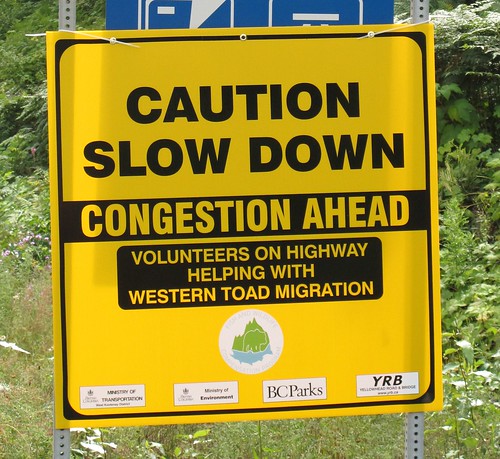
One of the greatest impacts on Western Toad populations in B.C. is habitat destruction. Development in and around wetlands can destroy or isolate populations. Migrating toads are killed by traffic on roads. Pollution, the introduction of aquatic predators (e.g., stocking lakes with fish), and the spread of diseases are also harmful. Large-scale concerns such as global warming and ozone depletion can affect Western Toads by changing temperatures, affecting water levels, and increasing ultraviolet radiation. Western Toads are on the provincial Yellow List, and are considered a species of conservation concern.


