You never know what you'll find inside a bird house, especially in Lac Le Jeune.
What can you expect to find on this site? Anything related to life in our community -- events, celebrations, wildlife alerts, stories, photos, conservation news...
Saturday, May 26, 2012
Monday, May 21, 2012
How to greet a dog
Earlier this year I attended an excellent 2-day seminar facilitated by Dr. Sophia Yin, an internationally-acclaimed veterinarian/animal behaviorist. It was organized by 5-Star Dog Training and held at Thompson Rivers University. Dr. Yin offers many free resources to educate vets, other dog handlers, and the general public about how to greet and interact with dogs. With so many dogs around Lac Le Jeune, I thought I would share this illustrated poster on how to greet a dog. You'll probably recognize several scenes in the what-not-to-do column. I think the most common misconception is that you should reach your hand out for the dog to sniff.
![]() |
| Click on the image for a larger view |
Sunday, May 20, 2012
Tuesday, May 15, 2012
Pets for Adoption
Thompson Rivers University Animal Health Technology needs loving homes for:
Submitted by Sonia Walczak
- Kidd: 10mth old Collie cross, very high energy, great with other dogs and people, still learning how to interact with cats, needs lots of activity and attention.
- Magoo: 5 yr old orange male tabby, friendly but likes attention on his terms:-) Good buddies with Carchuck
- Carchuck: 2 yr old black/white male, friendly, cuddly with personality plus! Good buddies with Magoo
Submitted by Sonia Walczak
Friday, May 11, 2012
Fire Prohibitions Start 15 May
Effective at 12 noon on Tuesday, May 15, the size of open fires will be restricted in most of the Kamloops Fire Centre to help prevent human-caused wildfires and protect the public. Read more at the BC Wildfire Management website.
Also of note, since April 1, Kamloops Fire Centre crews have responded to wildfire incidents covering approximately 300 hectares. Many of these wildfires resulted from poorly planned open burning. Everyone conducting open burns are encouraged to read this information bulletin.
Of particular note:
Also of note, since April 1, Kamloops Fire Centre crews have responded to wildfire incidents covering approximately 300 hectares. Many of these wildfires resulted from poorly planned open burning. Everyone conducting open burns are encouraged to read this information bulletin.
Of particular note:
- Do not burn during windy conditions. Weather conditions can change quickly and carry embers to other combustible material and start new fires.
- Never leave a fire unattended.
Wednesday, May 9, 2012
ICE OFF - the sequel
Thanks once again to Steve Roy for capturing the moments leading up to ice off on the Lac Le Jeune webcam. Get out the popcorn!
Winter Kill
There appears to have been a significant winter kill on the little lake, which explains the presence of so many eagles recently; they were gorging on the dead fish that were trapped in the rotting ice last week.
Hugh Burton shares some information about the biology of this phenomenon:
Winter kill results when oxygen dissolved in the water decreases below the point at which the fish can still retain life function. This degree of oxygen depletion occurs when the level of organic material in the water exceeds a critical level. The organic material is made up of dead leaves, trees lying in the water, dead: reeds, bulrushes, aquatic plants, and most significantly dead microscopic plants (phytoplankton) and dead microscopic animals (plankton). As these dead organisms decay the process uses up the oxygen present in the water releasing gasses such as carbon dioxide, hydrogen sulphide and methane. When the lake is covered with ice, the water beneath it is relatively static, and of course there is no surface area open to receive replacement oxygen. Natural water flow from inlet to outlet as well as mixing due to wind action is important in the maintenance of oxygen levels and these are reduced during winter conditions. Shallow eutrophic lakes (those with a high natural organic content) are particularly subject to winter kill as there is a much higher level of biodegradation occurring. This leads to a critical loss of oxygen and high level of resultant toxic gases and consequent die off of those animals that have the highest demand for dissolved oxygen. The longer the ice on period the more critical this becomes. Once the fish start to die under the ice they too begin to decompose further contributing to the oxygen depletion and toxic gas accumulation.This recent evidence of winter kill goes a long way to supporting our concerns for Lac Le Jeune water quality, particularly for that of the little lake.
Tuesday, May 8, 2012
ICE OFF!
Let the records show May 8th as ice off day for 2012. And, for the record, apparently our records for the history of ice off aren't accurate, but we're still waiting for someone to come forward with a revised list. Anyone?
Friday, May 4, 2012
Birds at Lac Le Jeune
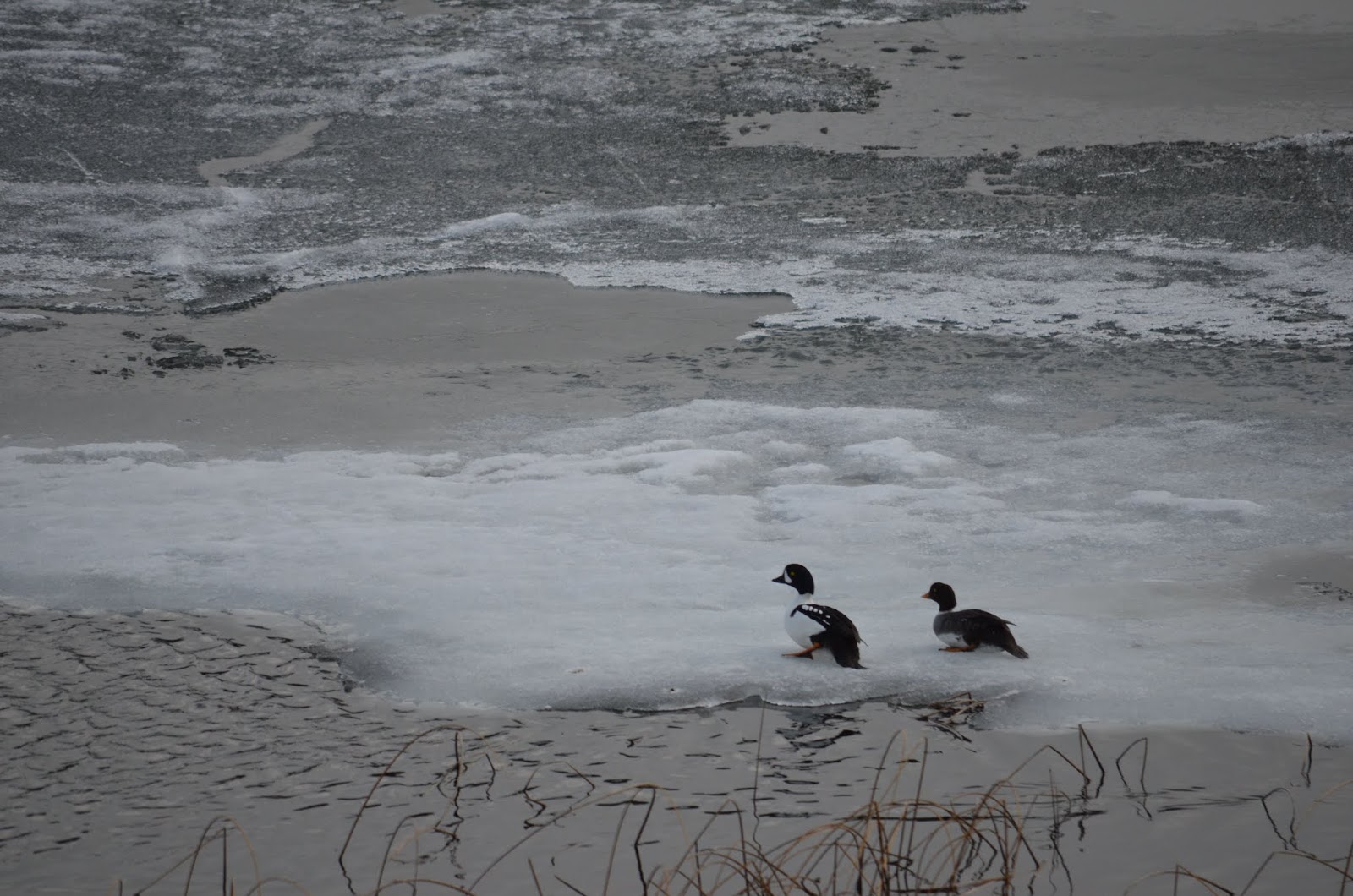
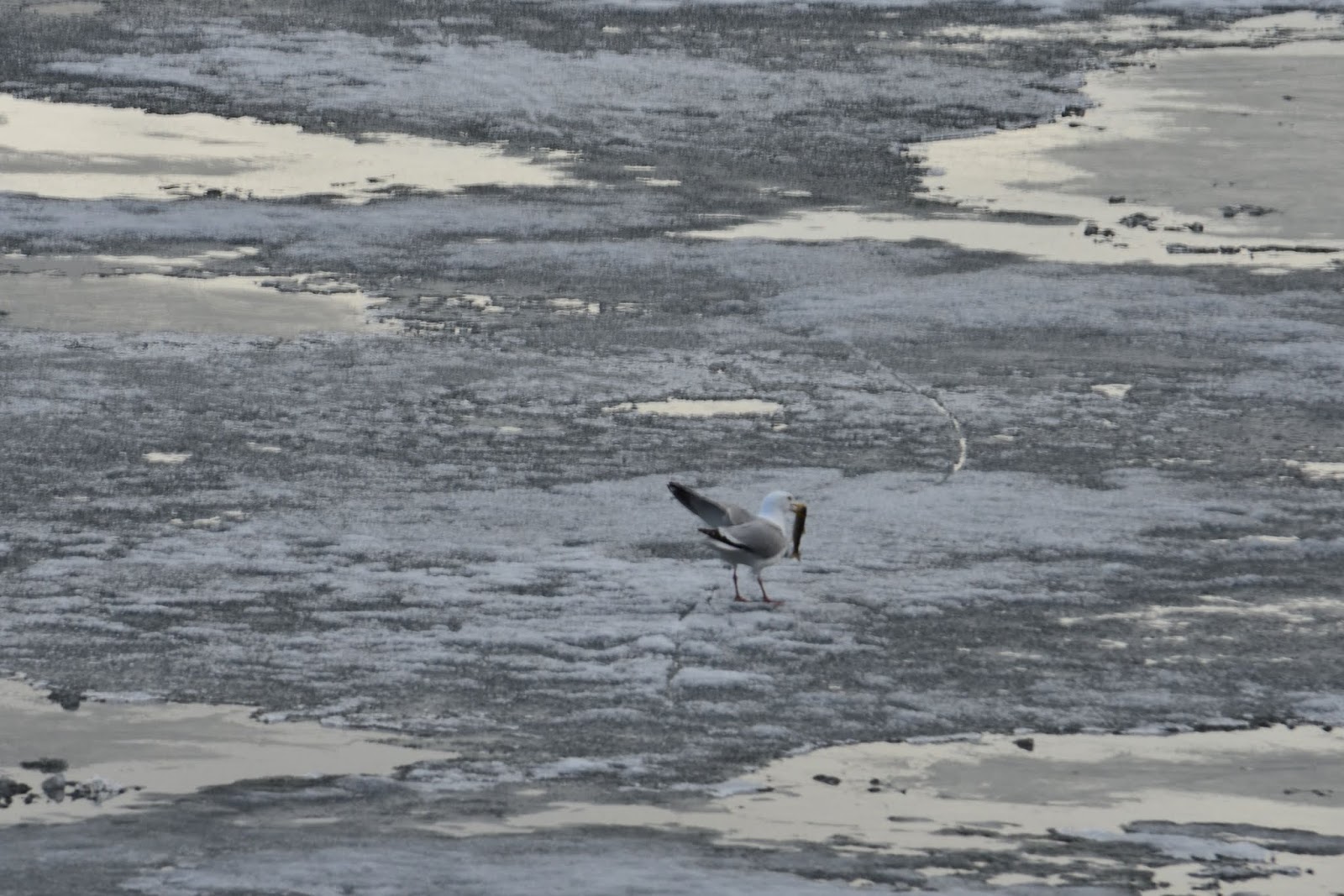
After a long, quiet winter, most of the residents at Lac Le Jeune are anxiously awaiting ice-off. Even the birds have been very busy out on the remaining ice, eager for spring and summer to arrive. Earlier this week there was plenty of activity to observe on the Little Lake. At one point, I saw five eagles together on the ice. Watching the wildlife here is what makes Lac Le Jeune an exciting place to live!
Sunday, April 29, 2012
Proposed Development and Water Quality
In September, following the Annual General Meeting of the Lac Le Jeune Conservation Association, a group with representation from all around the lake (Howie Mattfeld, Bev Lorimer, John Krawchuk from Ridgmont, Jeff Perry from the Little Lake, Hugh Burton from the Big Lake, Pam Sheridan, Bob Brown, Jim Phillips and David Wyse from Lookout Road) met to discuss the proposed development below the old ski hill. One outcome of this meeting was the formation of a "working group" made up of Bob Brown, Hugh Burton, Jim Phillips and David Wyse. The objective of the working group was to try to ensure that the quality of the water that we all take from the lake was not negatively impacted by the proposed development. In order to do this, the working group set themselves a few tasks including:
After four or five meetings of the working group, a letter to the TNRD was finally drafted and sent in December, 2011 with copies to relevant federal and provincial ministries. The full text of this letter can be found on the Lac Le Jeune blog and is on the bulletin board at the dump. We received a letter from the TNRD simply indicating that they had received our letter in January. In late February, we were contacted by Marge Sidney from the Ministry of the Environment Water Quality Section inviting us to participate in a program that would begin to monitor the water quality of the lake. Marge also suggested that we should become members of the B.C. Lake Stewardship Society which we have done. Membership in this Society provides us with a network of support and information. It also provides us with one Secchi Dish (used to monitor the clarity of the water) and insurance for volunteers who participate in the monitoring program.
Marge came up to the Lake on the evening of April 4th and met with the same group that had met initially. Gregg Lindros also attended this meeting. At this meeting, Marge outlined what is involved in a monitoring program. There was enthusiastic support from the people who attended the meeting. Subsequent to that meeting, Marge informed us that she has come up with some funding to help support a more sophisticated level of monitoring. (Eventually, we hope, with Ministry of Environment support to extend our monitoring program to the watershed.) Howie Mattfeld contacted our Area J representative from the TNRD and was able to procure a grant of $1000.00 to pay for a water meter which will enable us to easily measure temperature, oxygen content and conductivity. It is critical that we begin a monitoring program. The most recent data on the lake comes from the mid-nineties and the bulk of the data used by the developer's environmental assessment is 35 years old.
The working group met with Dan Wallace from the TNRD, Don Holmes, a retired water biologist and author of the developer's environmental assessment and Gregg Lindros at the TNRD offices on April 23rd. Mr. Holmes wanted an opportunity to respond to the concerns we raised in our letter. Little was learned from this meeting. Perhaps one concession made by the TNRD and the developer's representatives is that the Little Lake should be seen as a separate lake from Big Lac Le Jeune. Given that concession, the TNRD guidelines place Little Lac Le Jeune in the "Critical Category" with no further development allowed. Given it's size, according to the guidelines, there should be no more than 20% perimeter development. Already the Little Lake exceeds that guideline by between 200% and 250%.
It is clear that the guidelines have very little significance (after all, "they are just guidelines".) We were told at the April 23rd meeting that the criteria used to monitor development by the TNRD have been replaced by more "scientific" parameters. Despite repeated calls by us for clarification of just what these scientific parameters are, we received no response. We did, however, receive assurances that everybody has the best interests of Lac Le Jeune in mind and would do nothing to harm the environment in any way.
Once the ice comes off the lake, Marge Sidney will come up to provide training in using the monitoring equipment and recording the results. It would be great if we could get teams of people from all around the lake to participate in this program. The more knowledgeable we all become about living by a lake the better off we all will be. Watch the blog for more information.
- To become as knowledgeable as possible about Thompson Nicola Regional District Lakeshore Development Guidelines
- To try to glean as much information as we could about the current status (health) of the Lake.
After four or five meetings of the working group, a letter to the TNRD was finally drafted and sent in December, 2011 with copies to relevant federal and provincial ministries. The full text of this letter can be found on the Lac Le Jeune blog and is on the bulletin board at the dump. We received a letter from the TNRD simply indicating that they had received our letter in January. In late February, we were contacted by Marge Sidney from the Ministry of the Environment Water Quality Section inviting us to participate in a program that would begin to monitor the water quality of the lake. Marge also suggested that we should become members of the B.C. Lake Stewardship Society which we have done. Membership in this Society provides us with a network of support and information. It also provides us with one Secchi Dish (used to monitor the clarity of the water) and insurance for volunteers who participate in the monitoring program.
Marge came up to the Lake on the evening of April 4th and met with the same group that had met initially. Gregg Lindros also attended this meeting. At this meeting, Marge outlined what is involved in a monitoring program. There was enthusiastic support from the people who attended the meeting. Subsequent to that meeting, Marge informed us that she has come up with some funding to help support a more sophisticated level of monitoring. (Eventually, we hope, with Ministry of Environment support to extend our monitoring program to the watershed.) Howie Mattfeld contacted our Area J representative from the TNRD and was able to procure a grant of $1000.00 to pay for a water meter which will enable us to easily measure temperature, oxygen content and conductivity. It is critical that we begin a monitoring program. The most recent data on the lake comes from the mid-nineties and the bulk of the data used by the developer's environmental assessment is 35 years old.
The working group met with Dan Wallace from the TNRD, Don Holmes, a retired water biologist and author of the developer's environmental assessment and Gregg Lindros at the TNRD offices on April 23rd. Mr. Holmes wanted an opportunity to respond to the concerns we raised in our letter. Little was learned from this meeting. Perhaps one concession made by the TNRD and the developer's representatives is that the Little Lake should be seen as a separate lake from Big Lac Le Jeune. Given that concession, the TNRD guidelines place Little Lac Le Jeune in the "Critical Category" with no further development allowed. Given it's size, according to the guidelines, there should be no more than 20% perimeter development. Already the Little Lake exceeds that guideline by between 200% and 250%.
It is clear that the guidelines have very little significance (after all, "they are just guidelines".) We were told at the April 23rd meeting that the criteria used to monitor development by the TNRD have been replaced by more "scientific" parameters. Despite repeated calls by us for clarification of just what these scientific parameters are, we received no response. We did, however, receive assurances that everybody has the best interests of Lac Le Jeune in mind and would do nothing to harm the environment in any way.
Once the ice comes off the lake, Marge Sidney will come up to provide training in using the monitoring equipment and recording the results. It would be great if we could get teams of people from all around the lake to participate in this program. The more knowledgeable we all become about living by a lake the better off we all will be. Watch the blog for more information.
Subscribe to:
Posts (Atom)